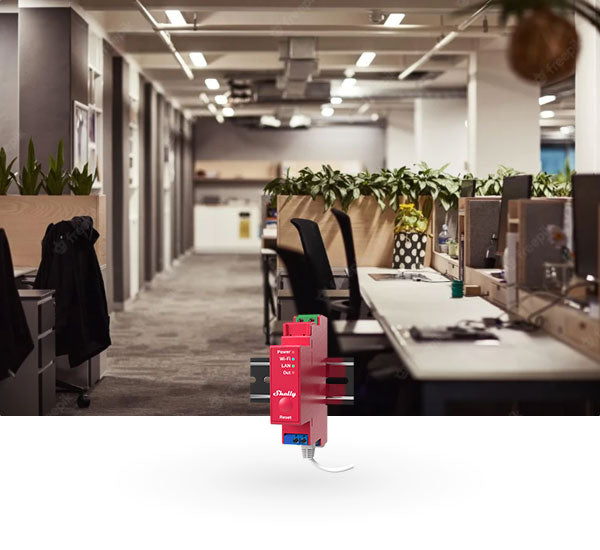
Next stop: KNX

What is KNX?

KNX is a bus system that serves as an international standard for building automation and links different devices and systems. What makes it special: KNX works across manufacturers and independent of the technology used. This connects different systems such as lighting, heating, blinds, airconditioningor security technology. Because the standard is open, powerful and future-proof, it is used both in residential buildings and in large office or industrial properties and can be expanded with minimal effort.

Smart-house-model-knx-home-automation

How does KNX work?

A KNX smart home communicates via a bus line, radio, powerline or Ethernet. All devices in the home - from light switches and motion sensors to heating control - are networked and exchange data. Sophisticated building systems technology ensures communication runs through a central protocol supported by all manufacturers. If a window contact from Manufacturer A sends a signal, the heating controller from Manufacturer B can react to it. Programming and coordinating the building control is done with dedicated software that allows processes in the home to be adjusted flexibly.

KNX smart home – mother with daughters on a sofa, controlling lighting and heating via powerful KNX building systems technology

Advantages & disadvantages of KNX 

Yes, KNX is powerful and flexible. But building systems technology brings not only advantages to the smart home with numerous options for boosting comfort, security and efficiency - there are also challenges to consider. The key KNX advantages in the smart home include cross-manufacturer compatibility, high energy efficiency and flexible expandability for residential and commercial properties. A closer look at strengths and weaknesses helps you decide whether KNX fits your home and your individual requirements.

Shelly Europe
AT A GLANCE:

KNX advantages in the smart home: 

  • Manufacturer-independent: Devices from different brands are compatible and speak the same KNX language. 
  • Future-proof standard: KNX has been established for decades and is internationally recognized, so reliable in the long term. 
  • High flexibility: Functions can be expanded or changed at any time, from single-family homes to large projects. 
  • Energy efficiency: Intelligent control of heating, lighting and shading can noticeably save energy and costs. 
  • Central building control: All systems run on one platform and can be operated manually, automatically or via app. 
  • Durable and stable: KNX favors wired solutions that are especially robust and low in interference; KNX can also communicate via radio or IP. 


Shelly Europe
AT A GLANCE:

KNX disadvantages in the smart home:

  • Higher initial costs: Installation and programming are more expensive than typical consumer smart-home solutions. 
  • Expertise required: Setup and adjustments usually need to be done by trained professionals. 
  • Planning effort: Especially in new builds, KNX should be planned early since cabling is part of the electrical installation. 
  • Difficult to retrofit: Installing KNX later in an existing home is labor-intensive. 
  • Less “plug & play”: Compared to many radio-based consumer products, KNX is more complex and less spontaneously expandable. 
Shelly Europe
AT A GLANCE:

KNX advantages in the smart home: 

  • Manufacturer-independent: Devices from different brands are compatible and speak the same KNX language. 
  • Future-proof standard: KNX has been established for decades and is internationally recognized, so reliable in the long term. 
  • High flexibility: Functions can be expanded or changed at any time, from single-family homes to large projects. 
  • Energy efficiency: Intelligent control of heating, lighting and shading can noticeably save energy and costs. 
  • Central building control: All systems run on one platform and can be operated manually, automatically or via app. 
  • Durable and stable: KNX favors wired solutions that are especially robust and low in interference; KNX can also communicate via radio or IP. 


Shelly Europe
AT A GLANCE:

KNX disadvantages in the smart home:

  • Higher initial costs: Installation and programming are more expensive than typical consumer smart-home solutions. 
  • Expertise required: Setup and adjustments usually need to be done by trained professionals. 
  • Planning effort: Especially in new builds, KNX should be planned early since cabling is part of the electrical installation. 
  • Difficult to retrofit: Installing KNX later in an existing home is labor-intensive. 
  • Less “plug & play”: Compared to many radio-based consumer products, KNX is more complex and less spontaneously expandable. 

KNX-compatible devices from Shelly

Many users ask: Is Shelly compatible with KNX? Yes, selected devices in the Shelly PRO Gen2 and Gen3+ lines work reliably with KNXnet/IP. With the arrival of KNX-compatible Shelly devices, some disadvantages – such as costs, difficult retrofitting or complex installation – can be mitigated. It becomes straight forward to integrate Wi-Fi switches and relays into building automation. KNXnet/IP functionality is currently supported by devices in the Shelly PRO Gen2 line as well as Gen3+, in each case from firmware version 1.4.0. A KNXnet/IP gateway is required for integration. KNX Security is not currently supported by Shelly.

A list of KNX-compatible Shelly devices can be found here.

Shelly Europe
Step-by-step:

Integrating Shelly devices into a KNX system

The combination of Shelly and KNX makes a smart home particularly versatile: KNX serves as the standard for professional building automation, while Shelly devices add flexibility and simple operation. Shelly KNX integration allows classic KNX sensors such as wall switches or window contacts to interact with Shelly Pro switches - uniting the strengths of both systems for smart workflows, high comfort, energy efficiency and every day practicality in modern building systems technology.

Presence detection – empty, lit hallway; a presence sensor prevents unnecessary light shutoff during quiet presence.
Simply flexible:

Expanding KNX systems with Shelly

This mix is especially attractive for anyone already using KNX who wants to extend it with Shelly devices. Existing installations can be expanded with features KNX alone might not cover - for example, app control, cloud connections or additional relay and metering functions. Instead of reworking the entire KNX installation, Shelly modules can be deployed precisely where they add comfort and flexibility to the home.

Colored ceiling light in a high kitchen‑living space; light color and brightness automated via the smart‑home app

How do Shelly & KNX work in practice? 

Once a Shelly device is integrated into your KNX network, it “understands” commands arriving via KNX - e.g., from a wall switch or a sensor - as well as commands from the Shelly app or a voice assistant. In practice, both worlds run in parallel. You could switch a lamp on via a classic KNX wall switch and switch it off again via the Shelly app. The same applies to automations and scenes: a KNX “All off” command and a Shelly app routine like “Dim lights after 10 p.m.” can coexist, as long as they don’t conflict.

Shelly Europe

Examples of using KNX with Shelly

Everyday use shows best what the combination of Shelly and KNX can really do. The close connection of KNX building automation with flexible Shelly Wi-Fi devices opens new possibilities for control, energyefficiencyand convenience in the smart home.

Modern residential building at dusk, illustrating the benefits of intelligent KNX building control
Example #1:

Lighting control with wall switch and Shelly

Shelly Pro 1 or Shelly Pro 2 is ideal–in combination with KNX–for controlling lights. The KNX wall switch sends the on/off command to the Shelly relay, which then switches the lighting. You can keep using the wall control as usual and additionally manage or automate everything via the Shelly Smart Control app. Result: maximum flexibility without giving up familiar controls.

Exterior blind in front of a window, managed by KNX sun sensor and Shelly integration for energy optimization
Example #2:

Blinds and sun sensor

For roller shutters or blinds, Shelly Pro 2PM is ideal. It controls the motors for up and down and simultaneously measures energy consumption. When a KNX sun sensor is integrated, blinds react automatically to sunlight: in strong sun, the KNX sensor reports to the Shelly Pro 2PM, which lowers the blinds to keep rooms pleasantly cool–no manual action needed. That boosts comfort and saves cooling energy.

Shelly Europe
Example #3:

Heating and window contacts

A Shelly Pro 1PM is a good fit when heating valves or heating controllers should be switched smartly. Combined with a KNX window contact, you get a very practical energy-saving setup: once a window is opened, the sensor detects it and sends a signal to Shelly, which interrupts the heating control automatically to prevent wasted heat. The result? Greater efficiency and a smart contribution to saving energy.

Modern residential building at dusk, illustrating the benefits of intelligent KNX building control
Example #1:

Lighting control with wall switch and Shelly

Shelly Pro 1 or Shelly Pro 2 is ideal–in combination with KNX–for controlling lights. The KNX wall switch sends the on/off command to the Shelly relay, which then switches the lighting. You can keep using the wall control as usual and additionally manage or automate everything via the Shelly Smart Control app. Result: maximum flexibility without giving up familiar controls.

Exterior blind in front of a window, managed by KNX sun sensor and Shelly integration for energy optimization
Example #2:

Blinds and sun sensor

For roller shutters or blinds, Shelly Pro 2PM is ideal. It controls the motors for up and down and simultaneously measures energy consumption. When a KNX sun sensor is integrated, blinds react automatically to sunlight: in strong sun, the KNX sensor reports to the Shelly Pro 2PM, which lowers the blinds to keep rooms pleasantly cool–no manual action needed. That boosts comfort and saves cooling energy.

Shelly Europe
Example #3:

Heating and window contacts

A Shelly Pro 1PM is a good fit when heating valves or heating controllers should be switched smartly. Combined with a KNX window contact, you get a very practical energy-saving setup: once a window is opened, the sensor detects it and sends a signal to Shelly, which interrupts the heating control automatically to prevent wasted heat. The result? Greater efficiency and a smart contribution to saving energy.

FAQs:

Is Shelly KNX-capable? 

Yes, selected Shelly Pro Gen2 and Gen3+ devices are KNX-capable from firmware 1.4.0.

Is KNX still up to date?

Absolutely. As an open, international standard, KNX remains one of the most powerful and future-proof approaches to building control.

Is there a Shelly & KNX compatibility list?

Yes, you’ll find an overview here and here.

How many devices can be integrated per line in a KNX system?

Up to 64 devices per line; with line couplers, several thousand in total are possible.