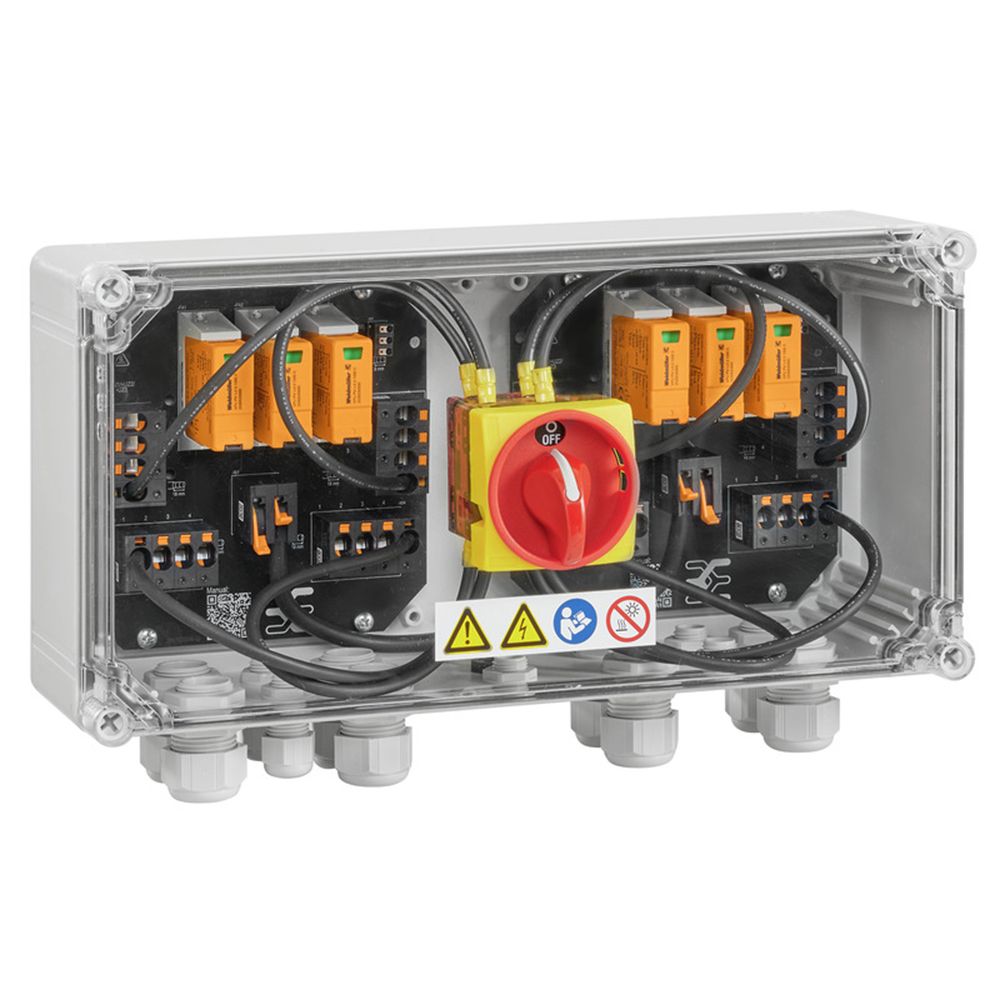
Automating PV Surge Protection Monitoring with Weidmüller PV Next and The Pill by Shelly.
Overview
This project is part of a residential photovoltaic installation with a hybrid single-phase inverter, approximately 10 kW of PV panels, and a battery system with approximately 100 kWh of capacity. The house itself is about 200 m², but the focus of this work is not system size; it is surge protection and how to monitor it properly.
Traditionally, surge protection in residential PV systems is treated as a passive component. Once installed, it is usually checked only during maintenance visits or after something has already gone wrong. In reality, surge protection devices are consumables; their purpose is to absorb and dissipate energy, and that means they can and will fail over time.
Why Weidmüller PV Next
I chose Weidmüller PV Next primarily because it provides dry contact signaling for external monitoring. This single feature turns surge protection from a passive device into an active part of the system.
PV Next is well-suited for DC photovoltaic systems and hybrid installations. The modular design allows the protection cartridges to be replaced module by module, without disconnecting cables or losing time. From an integrator’s perspective, this is critical: faster service, fewer mistakes, and lower downtime.
Using the Dry Contact for Fail-Safe Monitoring
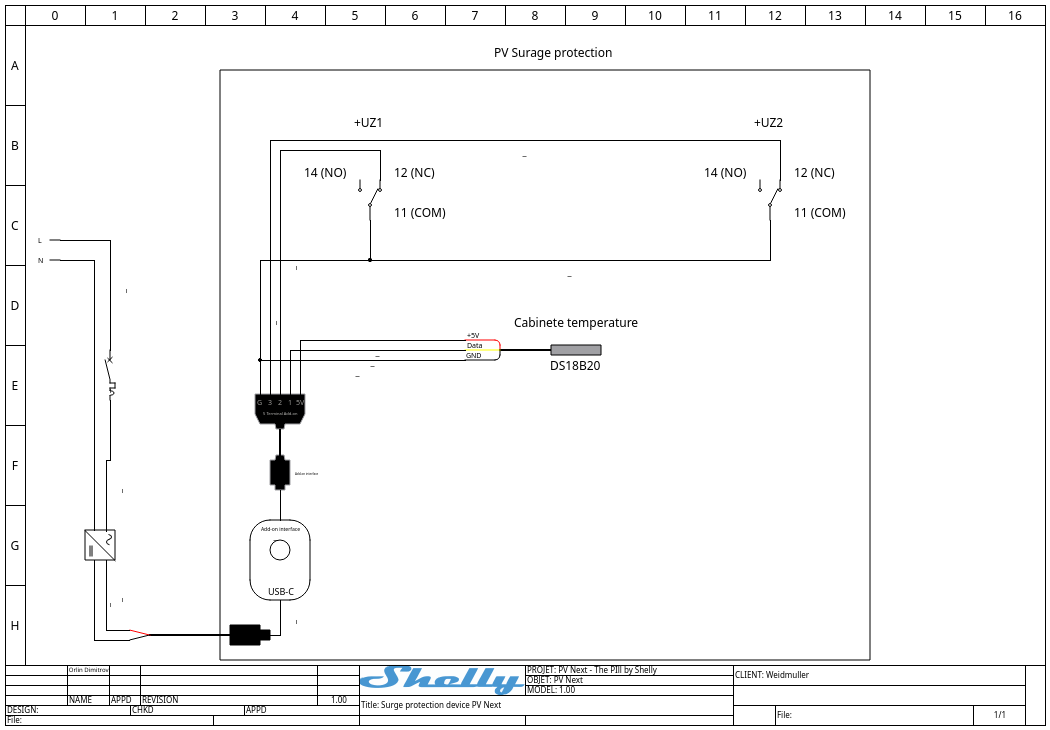
PV Next provides a COM, NO, and NC dry contact. In this setup, I intentionally use COM + NC. This creates a fail-safe logic:
-
Closed circuit = OK
-
Open circuit = alarm
If the protection is triggered, if a wire breaks, or if the monitoring device loses connection, the system immediately reports a fault. This ensures that missing information is treated as a problem, not as a normal state.
Why The Pill by Shelly
To read this dry contact, I needed a device that is:
-
inexpensive,
-
compact enough to hide inside the cabinet,
-
capable of reading digital inputs,
-
cloud-enabled but also usable locally.
The Pill by Shelly fits these requirements perfectly. In addition to the potential-free contact input, it also supports digital temperature sensors (DS18B20), which I use to monitor cabinet temperature. This is important because the cabinet must be protected from direct sun and rain, UV radiation, and moisture can damage enclosures and electronics over time.
Wiring Diagram
The dry contact from PV Next is wired directly to The Pill using a 5-terminal add-on adapter and an external power supply. No intermediate relays are required.
.jpeg?cb=2655126d79db602c4c26e2adbcba3010)
.jpeg?cb=dcd716c74a45e991d0e1892e93c4b2ca)
.jpeg?cb=9ba16e4ecbe42ebac7477cbd80c15788)
Configuration Concept
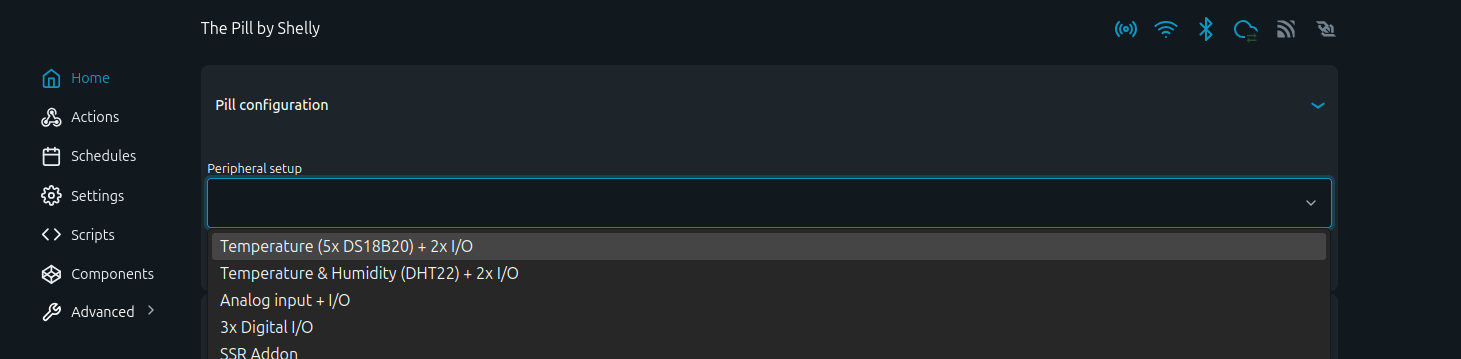
Configuration is straightforward:
-
Power up The Pill
-
Connect it to local Wi-Fi
-
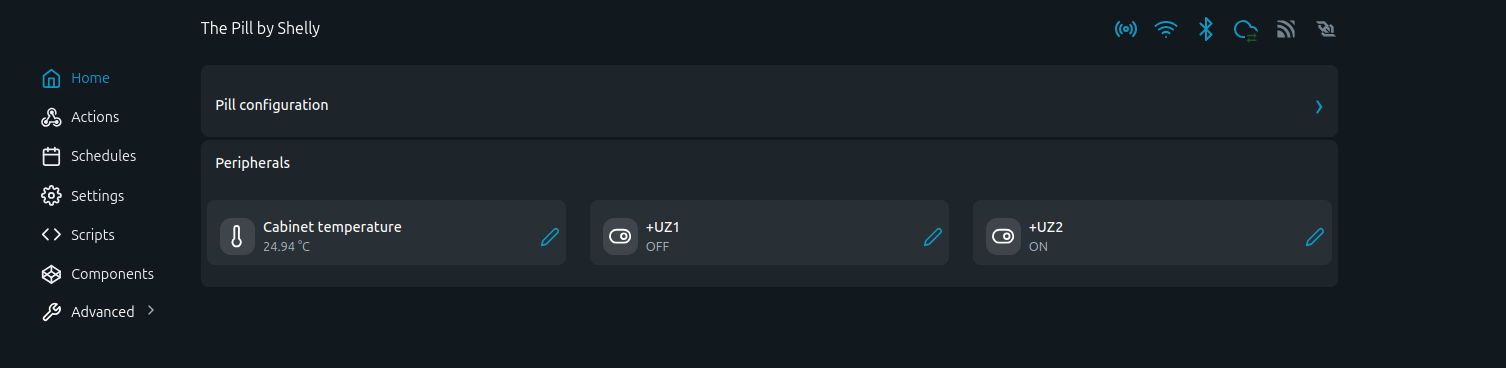
Configure Digital I/O 2 as a digital input as shown
Screenshots make this process reproducible for other integrators.
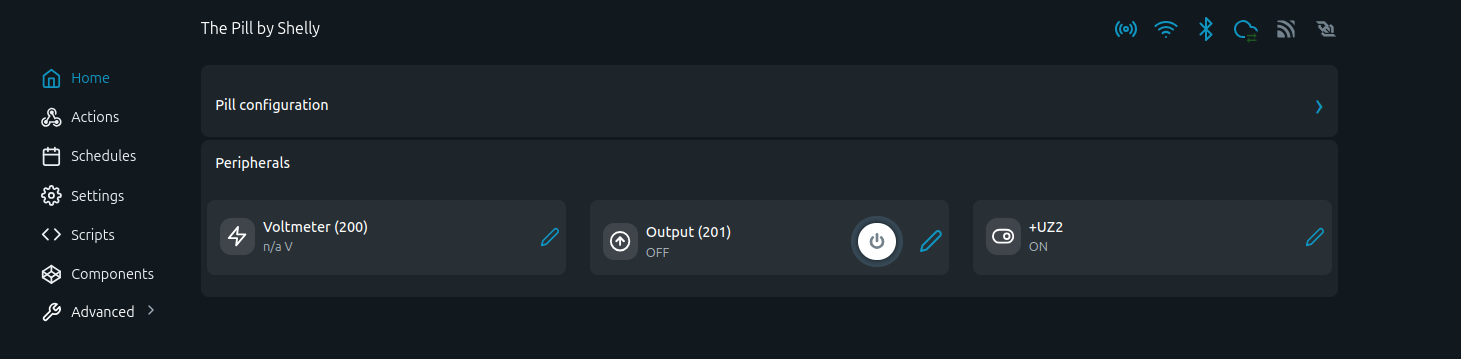
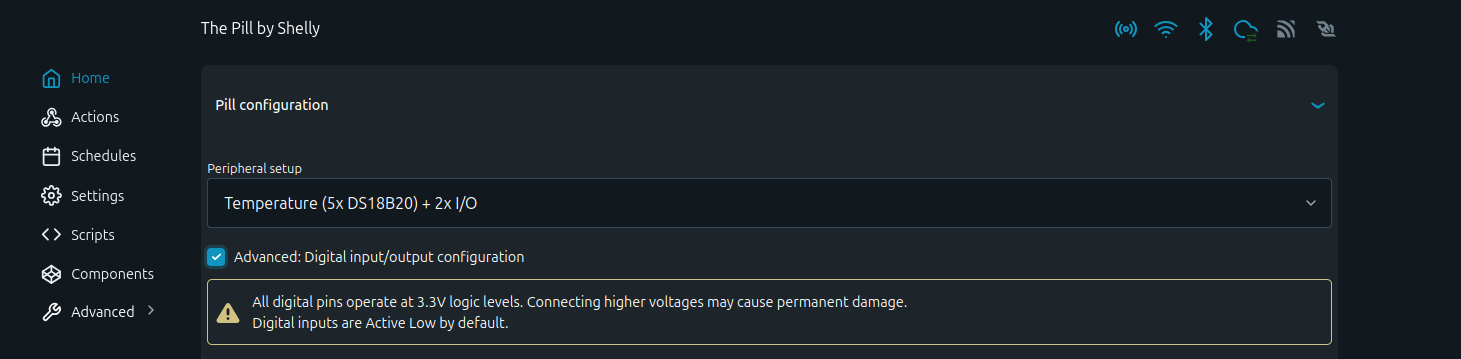
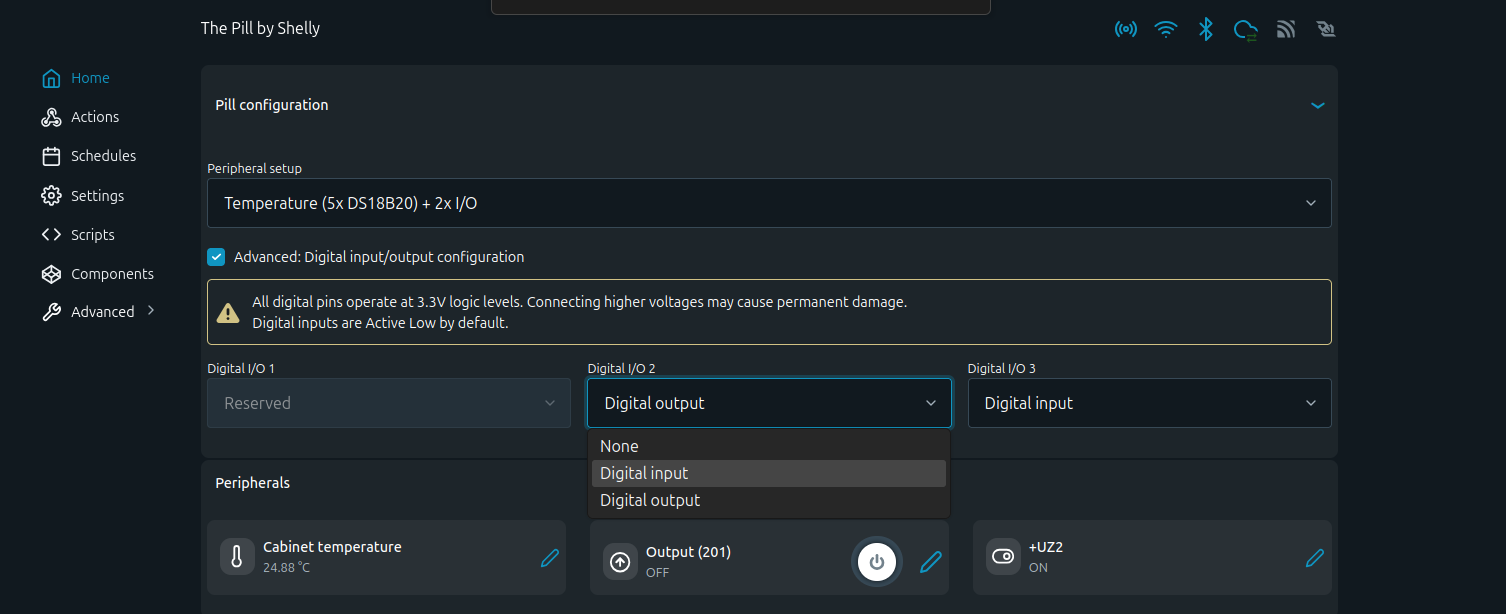
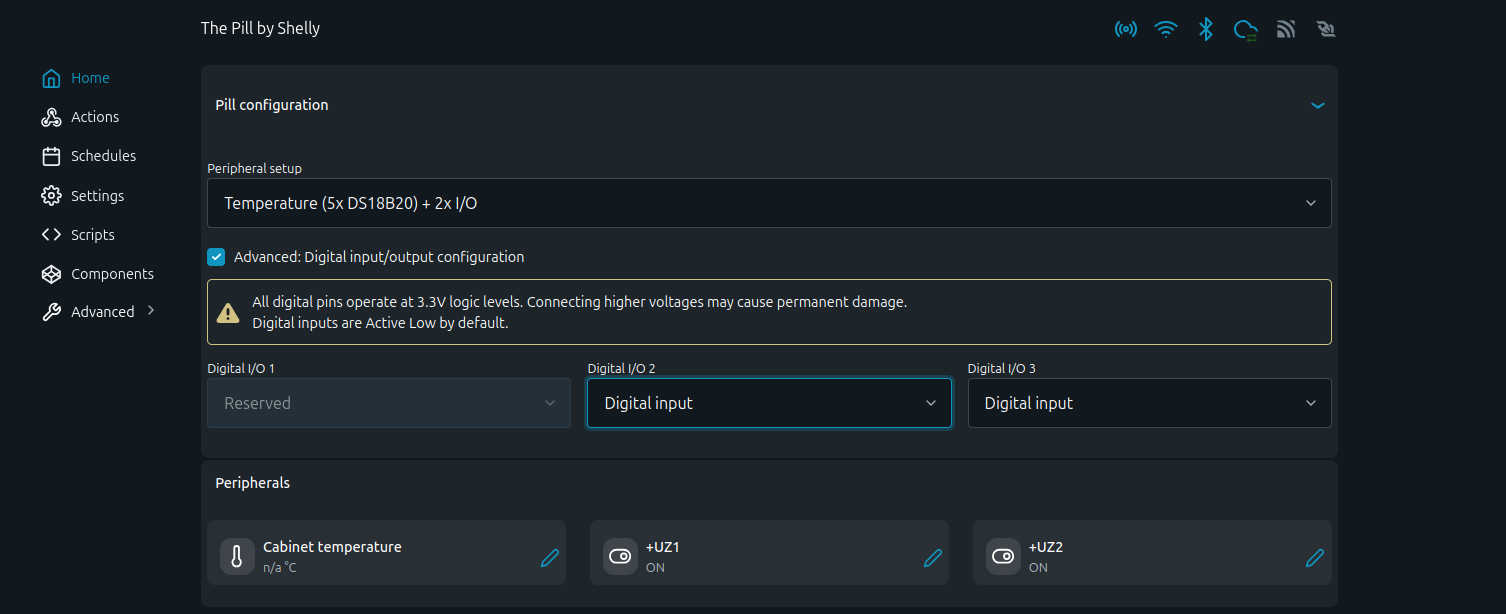
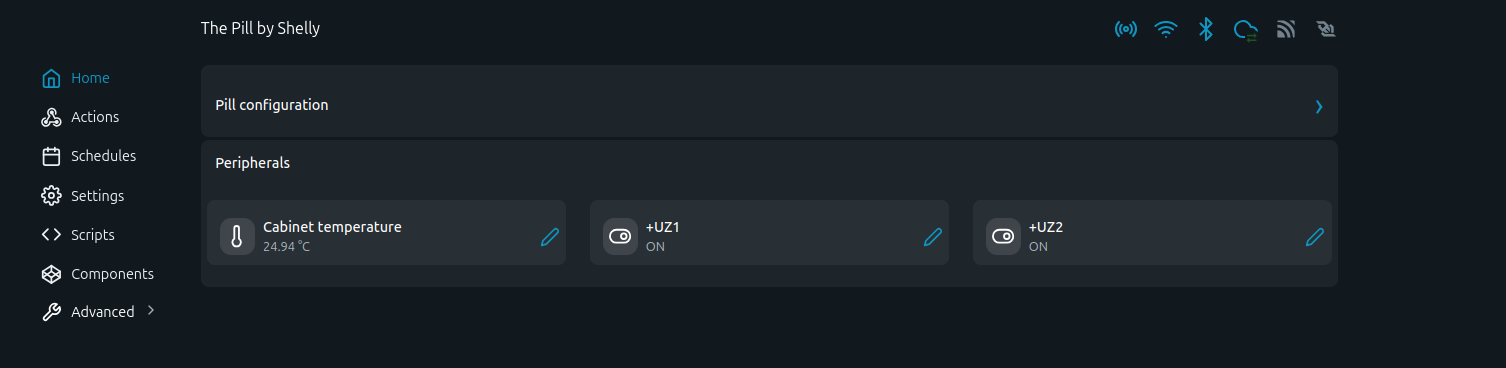
If you unlock one of the +UZ1 protections and remove it from the slots. Immediate OFF signal should shows on the screen.
-
Then reboot the device to ensure it stable behavior.
Cloud, Notifications, and Ecosystem
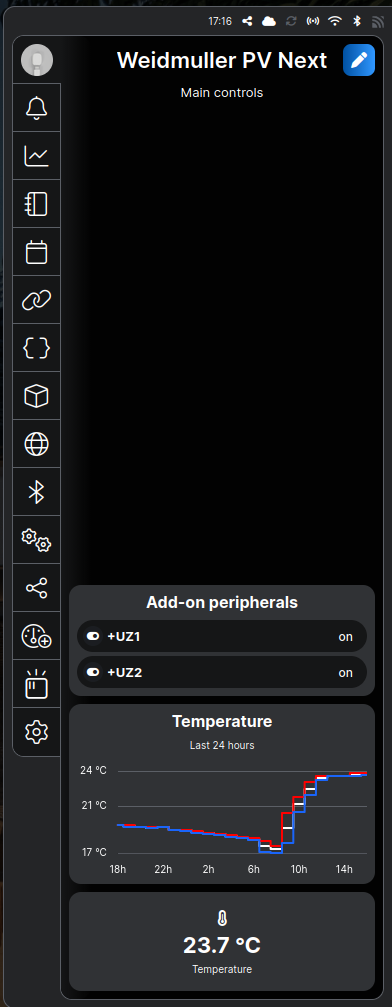
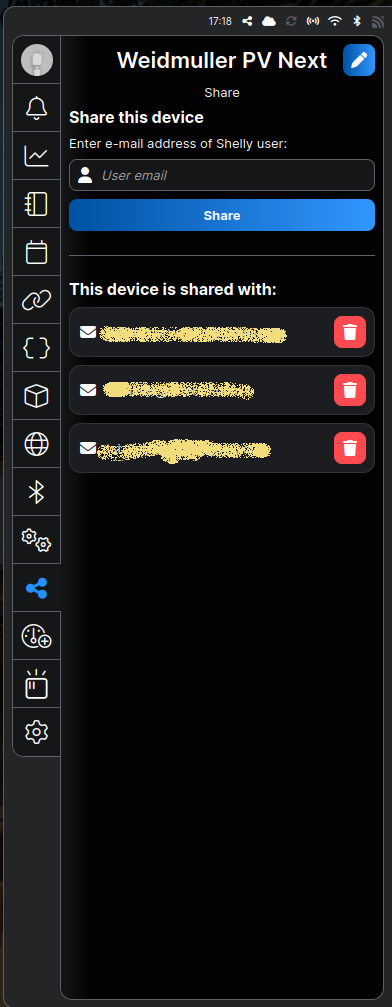
Once connected to the Shelly Cloud, the surge protection status can be shared with technicians, owners, and monitoring or support roles. Using scenes, notifications, scripting, or APIs, this signal can become part of a larger ecosystem, including Home Assistant, SCADA systems, or custom automation logic.
Sharing information from the PV Next to other colleagues.
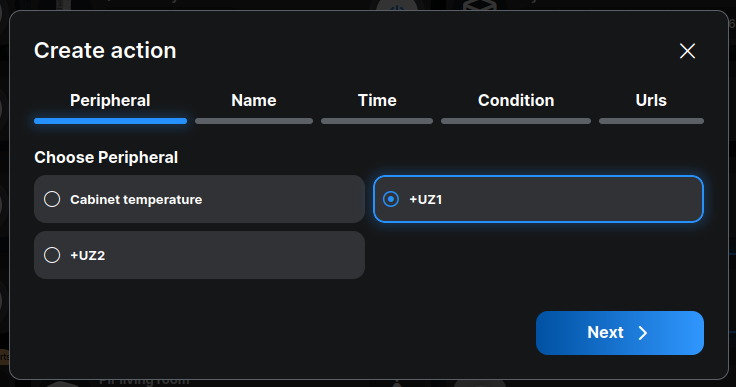
Brief action on classic manner type IFTTT logic directly on The Pill.
Why This Matters
When a failure occurs, the responsible people are notified immediately. Clear procedures can be followed, from inspection to safety actions if a serious event occurs. This reduces downtime, limits damage, and improves safety.
For me, this is not a one-off solution. It is a repeatable pattern that scales from residential systems to large PV parks.
-
Safer systems.
-
Minimal changes to existing installations.
-
Cheap, reliable monitoring for any system size.
That is why this approach is worth implementing.